Wisconsin Initiative on Climate Change Impacts


University of Wisconsin System

University of Wisconsin System (Photo credit: Wikipedia)

Wisconsin Initiative on Climate Change Impacts

I want to recommend the materials and resources at the webpage for the Wisconsin Initiative on Climate Change Impacts.

It includes many graphics and detailed presentations about climate change.

I have occasionally managed to find the time connect to WICCI Webinars.  There is one coming up at the end of this month.   This one will discuus:

  • Organizing for stakeholder engagement
  • Challenges in managing the climate adaptation dialog
  • Successes in advancing regional adaptation

The Wisconsin Initiative on Climate Change Impacts (WICCI) assesses and anticipates climate change impacts on specific Wisconsin natural resources, ecosystems and regions; evaluates potential effects on industry, agriculture, tourism and other human activities; and develops and recommends adaptation strategies that can be implemented by businesses, farmers, public health officials, municipalities, resource managers and other stakeholders. WICCI represents a partnership between:

  • The University of Wisconsin,
  • The Wisconsin Department of Natural Resources (DNR),
  • Other state agencies and institutions.

It combines cutting-edge climate modeling capabilities with field expertise to assess impacts at focused and relevant measures of time and space. It fosters collaboration among units across the UW System; and with agencies and institutions across the state. It develops practical information that can be used at all levels of decision making, both public and private. It is driven by stakeholder input to ensure that WICCI assessments meet the informational needs of Wisconsin citizens, businesses and institutions.

Unlike the Governor’s Global Warming Task Force, which targets mitigation of greenhouse gases – how we affect the climate – WICCI focuses solely on the impacts of climate change – how the climate affects us.

About WICCI

WICCI represents a unique and innovative process to develop a statewide climate change adaptation strategy. WICCI has formed through a non-bureaucratic, bottom-up approach to engage scientists, researchers and management agencies in understanding the impacts of climate change on communities and natural resources  across the state, and to develop strategies to make them more resilient to climate change.

WICCI was established in the fall of 2007 as a collaboration between the University of Wisconsin–Madison’s Nelson Institute for Environmental Studies and the Wisconsin Department of Natural Resources (WDNR). Prior to WICCI’s formation, both entities had independently begun to examine the issue of climate change impacts. The Nelson Institute effort began in response to questions from  state legislators who wanted to understand how climate change could affect their constituents.  The WDNR effort was in response to agency staff concerns about how climate change would impact the state’s natural resources for which the agency had stewardship and management responsibilities.  A joint meeting of 40 UW-Madison and agency scientists in early summer 2007 became the springboard for joining forces and launching a statewide effort.  Following that meeting, a small, ad-hoc group of scientists from both entities developed the structure of WICCI – an organization that quickly grew to include representatives from other state and federal agencies, several UW System schools, tribal organizations, businesses and non-profit groups.

Organization

WICCI is governed by a Science Council whose members are chosen from an array of disciplines within the University of Wisconsin System, the Wisconsin Department of Natural Resources and other state and federal agencies, universities and institutions. The primary function of the Science Council is to organize and coordinate Working Groups that have the scientific expertise to assess climate change impacts pertinent to specific issues or areas of concern. An Operations and Outreach Unit in the Nelson Institute for Environmental Studies at UW-Madison facilitates the operations of the Science Council and be responsible for the outreach mission of WICCI. It also coordinates the activities of an Advisory Committee.

Posted in Leadership, Recommendations | Leave a comment

In Great Beauty Judged


I was studying Psalm 50 last week, and perhaps just browsing some through my Bible and through my personal journal, when this piece just kind of flowed out.

In Great Beauty, Judged

MB900442425God has been with me,
even as I got lost several times,
too many times, and
has spoken to me from the violet and
amber sunrise, to the indigo setting.
Perfect beauty, God has shined.
Beauty that I oft-times missed, and
saw in photos shared,
how can my sight be so indirect some days?
Sunday, I have seen and heard.
Monday, I quaked and missed it.
Wednesday, did I sleep through it?
In the covenant with me,
some days I missed the grandeur of it.
Judged, I have lost His call above
and below.
He gathers saints together, across time.
He knows all these birds, all these beasts of burden,
all these exotic plumes.

Man reading Psalms at the Western Wall. Jerusa...

Man reading Psalms at the Western Wall. Jerusalem, Israel/Palestine, March 2007 (Photo credit: Wikipedia)

I have been silent too.
I offer praise now.
I set aside my silence.
I see and hear great beauty.
I arrange my conversation, now,
in right ways.

(C) Tom Bolton, 8 April, 2013, Milwaukee

Posted in Poetry, Poetry, Reflecting on Scripture | Tagged , , , , | 1 Comment

Morning Out at Northcott Neighborhood


Our Second Saturday Servants group from West Allis First United Methodist Church is working at Northcott Neighborhood House the next few months. In fact, we were there this past Saturday. A small crew also makes sandwiches each month for delivery to homeless folks outside.  We made 28 sandwiches Saturday and they were delivered and enjoyed on Sunday

Stockbox
Northcott Neighborhood House offers a variety of programs to enrich our community.

This past week, our crew was organizing  clothing in the clothing room, and helping at Mothers Morning Out. We had cleaned out the clothing room and put up shelving in the Fall.  This month we added some new donations, put winter clothing in boxes and put more of the spring and summer clothing out in bins.  (Yes, we are past winter!)

We were heartily greeted when we arrived at Northcott again on Saturday.   I love to see the many young people participating in activities at Northcott.  A team of eight teenage volunteers was working near us, and helped move some of the larger boxes of clothing to us.  I am inspired by how hard these teenage men are working.

English: Copyright © 2005 Sulfur A view of th...

We worked in the tight confines of the clothing room most of the morning.  There were not  many children there for mom’s Morning Out at first.  (A group of older youth went out into the neighborhood Saturday morning to publicize the event door-to-door, and children were delivered later in the morning.)  I was thankful that the activities with the children got going, so that Karen, from our group, could go down and read to children and paint faces.  She is a long-time teacher, and I know she was excited about this activity.

A high point of the morning for me was a small, but meaningful, event.  As we were stacking clothing and sorting away, and getting a bit sweaty Saturday morning, one of the young men came in to offer us beverages.  No one told him to do it.  No one directed him to the supplies.  He just thought it out on his own to stop by and see if we would like to share some apple juice with him.  We were thirsty–even though I’m not sure we had thought about it.  I loved how thoughtful he was to we strangers working in the next room.

I stopped by the gym late in the morning–on my way to pick up some supplies–and was amazed that all the youth playing basketball were at least 18 inches taller than me.  Was I always so short?  They sure looked talented and joyful at that moment in the late morning.

I look forward to new volunteers joining us on May 11.  I expect there will be lots of new young children there; I expect this event may move into the afternoon in future month. I am hoping to see two new volunteers in our group each month. I think it will be a good sign of our discipleship. We invite people from all over the community to join us each Second Saturday at 9:00 am. There is no need to be a member of West Allis First UMC. We just look for your sincere ministry to those who need us and love our presence.

Posted in Recommendations, Reflecting on Missions | Tagged , , , | 2 Comments

Another Good Prayer for Discernment


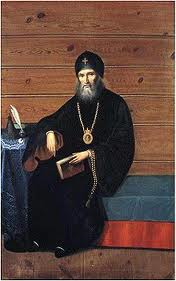
We all seemed to like the prayer by Thomas Merton that I linked to last Monday.  Here is another inspiring prayer for discernment.  This is by Vasily Drosdov Philaret, a Russian Orthodox biblical theologian and metropolitan, or archbishop, of Moscow whose scholarship, oratory, and administrative ability made him a leading Russian churchman of the 19th century.

O Lord,

I do not know what to ask You.
You alone know my real needs,
and You love me more
than I even know how to love.
Enable me to discern my true needs
which are hidden from me.
I ask for neither cross nor consolation;
I wait in patience for You.
My heart is open to You.
For Your great mercy’s sake,
come to me and help me.
Put Your mark on me and heal me,
cast me down and raise me up.
Silently I adore Your holy will
and Your inscrutable ways.
I offer myself in sacrifice to You
and put all my trust in You.
I desire only to do Your will.
Teach me how to pray
and pray in me, Yourself.

Amen.

Posted in Disciplines, Recommendations | Tagged , , , | 1 Comment

Ministry WITH the Poor


Poverty

Poverty (Photo credit: Teo’s photo)

Ministry WITH the Poor

This blog will be eye-opening for some.  I think the points made by Rev. Paul Slentz,  Pastor of Sixty-First Avenue United Methodist Church in Nashville,Tenn since 1997, are right on.

He starts out with, “A conversation about ministry “with” the poor should start with one important reminder: the poor are indeed in ministry.

“I didn’t always know that this was the case. Growing up in a suburban church, which supported an inner-city congregation with dollars and volunteers, I believed that poor people were recipients rather than doers of ministry. I didn’t have any direct contact with the downtown church and so thought of its members exclusively as people my church did things “for.” That perspective was partly due to my youthfully narrow experience of the world generally. Yet, I wonder if it is not shared to some degree by many middle-class Christians of all ages, most of whom also have limited personal connection with the poor. And since the United Methodist Church is largely a middle-class church, we may be particularly susceptible to thinking of the poor as objects rather than subjects of ministry. But all one has to do is live, work, or do ministry in an impoverished area, even for just a short while, to have all doubts dispelled as to whether poor people are living out their baptismal call to be ministers of the Gospel.

“For the past twelve years, it has been my privilege to be pastor of Sixty-First Avenue United Methodist Church in Nashville, Tenn. Ours is a small congregation of seventy that is made up, with a few exceptions, of persons whose incomes are below the poverty level. Many of our members are homeless ,,,,,,

The whole blog is worth a read.

Posted in Recommendations, Reflecting on Missions | Tagged , , , , | 1 Comment

Why Wesleyan?


Wesleyan Crest

Wesleyan Crest (Photo credit: Wikipedia)

I’m glad that others posted links to this video (See, for example, the wesleyananglican blog ). This mini-lecture is very useful for me right now.  I hope you will like it and be inspired by it too.

Posted in Learners Leaders and Relationships, Recommendations | Tagged , | Leave a comment

Asking Questions versus Telling Answers


Great observations by Mr. Morgan. I keep reminding myself to ask more and tell less.


Steve Morgan's avatar

It was a simple question, but six months later the words still formed how the young leader processed life. On a walk with my son, he related that he was still processing a question I asked him six months earlier. Note to self: Questions impact more than telling.

Sometimes I want to be the knowledge expert, the “go-to” guy to solve and fix problems rather than a guide who leads others to discover answers for themselves. During recent meetings with our Western Europe leadership, I was reminded of the value of asking questions versus telling answers.  Paul Duncan modeled this by leading us through an exercise.  One group brainstormed on the disadvantages of telling while the second group wrote down the advantages of asking.  Here are our answers below:

asking vs telling

What would you add to the lists? What are the advantages of asking?  What are more disadvantages of telling?

If…

View original post 55 more words

Posted in Leadership, Recommendations | Tagged , , | Leave a comment