John Maxwell on Filing


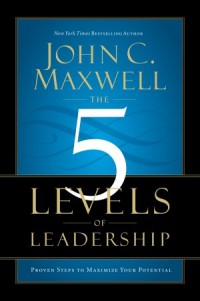
This morning, I happened upon an older blog by John Maxwell about how he files. I have not done well with filing my references and resources over the years. I often want to use  materials and references for classes I lead; I can recall a source basically, but often can’t quite find it.  I have resolved to do better many times, but never stuck with it.  I think I may try this basic approach, but use my laptop as my primary repository, and index cards for a few things that I don’t have electronically.  Currently on my laptop, and on memory sticks, I have 10 categories for saving articles, quotes, and ideas (mine and others).  Too few!

Here is the John Maxwell blog I was referring to:  File Under F For Filing.

I’ve been reading Maxwell for 15 years or more now, and I still find lots of value in his work.

Full Disclosure:  I won a copy of  5 Levels of Leadership last year, and I appreciate having a  few autographed copies of Maxwell books 

Posted in Recommendations | Tagged , , | 1 Comment

In this Beloved Community


In This Beloved Community

In this village, conversation is new and can-do;
As Jesus healed, preached, healed, we do what we are called to do.
Beloved, as God loves us, not often so lovable,
We seek new communities, our miracles now doable.
The time is fulfilled, and we know the kingdom of God is near;
We repent and believe good news still, but hold back some, in fear.
As Jesus traveled along his lakes to preach and heal,
We set out–welcoming, forgiving, joyful–genuine, real.
We seek here to be tempered;
An anvil of prayer and fasting, hammered.
Here we nurture others and self in the midst of difference,
But it is clearly in action that we become aware and sense,
Here to be tempered and lasting
On anvil of prayer and fasting!
It is in our community of good news,
Where we, continually connected, removed our shoes,
and welcomed, we accept to have our feet cleaned;
Humbled, we serve and are served, here gleaned.
In this fountain of fast-falling information,
We–vulnerable, open, in mission, trusting–find transformation.
Yeast in the new loaf, we are here–here to rise.
Unlike Herod’s or the yeast of the Pharisees,
We carry new bread, and new wineskins, here,
In action, and with more in mission, open, we hear.

(C) Tom Bolton, March 27, 2012


I wrote this while studying the Gospel of Mark early this morning. I had fresh memories of a meeting with Bishop Lee and a crowd from the Metro District percolating in my mind too.  We had discussed a few elements of Peter Block’s 2008 book, Community, The Structure of Belonging, along the way.

Of course, Dr. Martin Luther King had a vivid vision of the beloved community deep in his speeches.

Posted in Poetry, Reflecting on Scripture | Tagged , , , , , | Leave a comment


Hans blogged a fine, old Charles Wesley Hymn today at his blog, enMissioned. I just wanted to pass it forward today.

Hans H.'s avatarenMissioned

Leader of faithful souls, and guide
Of all that travel to the sky,
Come and with us, even us, abide,
Who would on thee alone rely,
On thee alone our spirits stay,
While held in life’s uneven way.
 
Strangers and pilgrims here below,
This earth, we know, is not our place,
And hasten through the vale of woe;
And, restless to behold thy face,
Swift to our heavenly country move,
Our everlasting home above.
 
We have no abiding city here,
But seek a city out of sight;
Thither our steady course we steer,
Aspiring to the plains of light,
Jerusalem, the saints’ abode,
Whose founder is the living God.
 
Patient the appointed race to run,
This weary world we cast behind;
From strength to strength we travel on,
The new Jerusalem to find;
Our labour this, our only aim,
To find the new Jerusalem.
 
Through thee…

View original post 81 more words

Posted in Recommendations | Leave a comment

Starlight Mints


No. 10

Peppermint candy,

Lovely Taste,

Delicious beauty,

A peripatetic dancer,

Skipping,                    

Hopping,

Whirling

around

and around and around

and Tickling my senses,

Forcing lust,

Casting blue-green shadows

and

Mighty images.

i

l – o – v – e

Peppermint candy,

But i keep it a

Secret.

This was the tenth poem in an anthology I wrote in 1970, and it was the first poem I had published–in a small literary magazine for High School Students–in 1971.  At the time, I just liked the imagery a lot.  My dad really loved starlight mints, so they were always around me.  I didn’t care much for them at the time.  I eat them sometimes now, because they remind me of Dad.

Here is another short poem from that series, and it was also published.  It is interesting that these were the only two whimsical poems in the collection, and they were also the only two published.

SPIRO AGNEW?

Spiro Agnew?
          a candy bar?
NO. NO.
A candy bar is:

Sugar,
Chocolate,
Milk,
Peanut Butter,
Salt,
a nougate, don’t you see? 

And full of nuts.

Nuts?
Nuts!

Spiro Agnew –
A candy bar

(C) Tom Bolton 1971

Spiro Agnew was the only non-number-named piece in the anthology. I lost that collection in 1982, and recently found about 50 pages of the journal. I may put more of them on this blog, if there is interest. This collection tends to be more global, and political, and less spiritual. But my poetry roots go back to this time in my life.

Posted in About Tom, Poetry | Tagged , , , | 1 Comment

Echoing Passover in This Worship


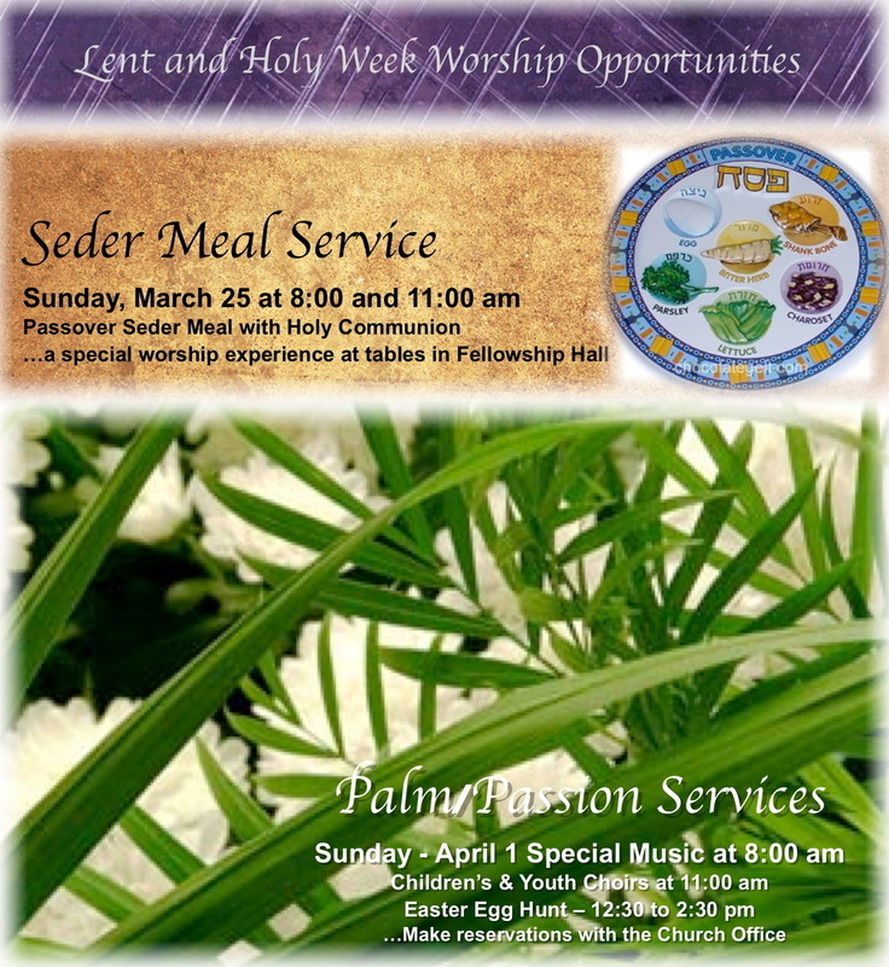
In 2009, discussing the Last Supper during Lent with our Confirmands, it was clear that none of them knew on that day the stories of Exodus. In order to help remedy that condition with our youth (and adults), these past two years we have celebrated a beautiful worship service that recalls the Passover Seder, and looks at it in light of our Christian awareness of Jesus in our lives, and Jesus who celebrated Passover.

Our goal has been that this service will be a learning experience to help all of us, and especially the Confirmands, to understand the Exodus story, and to be able to ask “Why is  this important?’ and to think about it.    That it be spiritually enriching.  There was once a longer list of goals, but I think this captures the vision of what we intended.

My first email to my co-leaders in Confirmation on this subject was modest:

“Hi Partners.
 
“One of the things I would like to add to our curriculum at Passover Time next year, is to have a Seder meal and discussion of Passover.   
 
“We used to do a Passover celebration for grades 1 – 5 Sunday School Classes.  Haven’t had that for quite a few years, I think.  I have talked with others from those earlier times and they are willing to help.
 
“I have lots of good handouts and would like to put together a Passover meal for classes 3-8 next year.
 
“I would like to have the Confirmation Class help prepare it and set it up.  I am happy to lead this unit if you all are okay with it.
 
“It became very clear that the current Confirmands knew very little about Passover, and many Old Testament stories this year.  I think adding this activity would help enrich the program.  What do you think?”
 

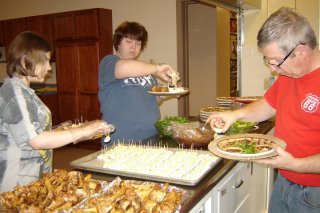
Eventually this became a Seder meal service held at two worship times for our whole congregation.

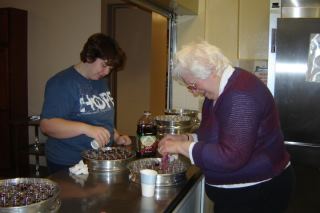
I thank Pastor Susan, Rev. Amy and Michael for composing the beautiful service. I thank several dozen friends who have helped put together the beautiful tables and Seder plates, exceptional music each year, and attention to detail that I can scarcely believe. In particular, I must call out Barb and Val and Bonnie to celebrate them for all their exceptional, detailed work.  I take pride, I must confess, in nagging and cajoling some folks to get this started and keep it going.

I keep up a Facebook page on the Seder Meal planning and learning.  Here are a few entries from the past two years:

The Passover Seder was meant to be a time of joy and celebration, retelling the story of God delivering his people from slavery in Egypt. It hinted at
the hope that God would send the Messiah.
So at noon on Thursday he turned to two of his disciples (Luke
tells us it was Peter and John [21:8].) and told them to go into
town and prepare for the Passover feast, or Seder, which he and
… his disciples would eat in private.
Jesus said to his disciples, “Go into the city, and a man carrying
a jar of water will meet you, follow him” (Mark 14:13). Carrying
water was a woman’s job, so such a man would stand out
on Jerusalem’s busy streets.~~24 Hours that Changed the World, Pastor Adam Hamilton
 

“The Lord said, ‘I have indeed seen the misery of my people in Egypt. I have heard them
crying out because of their slave drivers, and I am concerned about their suffering. So I have  come down to rescue them from the hand of the Egyptians and to bring them up out of that land into a good and spacious land, a land flowing with milk and honey. . . .’” (Exodus 3:7–8)


Through these lessons of preparation, we hope to understand underlying principles of the Jewish celebration of Passover which are:
• That God hears the cries of His people;
• That God is present in human life; and
• That God intervenes in history to deliver man from affliction and to redeem him from oppression.

“The Lord said, ‘I have indeed seen the misery of my people in Egypt. I have heard them crying out because of their slave drivers, and I am concerned about their suffering. So I have come down to rescue them from the hand of the Egyptians and to bring them up out of that land into a good and spacious land, a land flowing with milk and honey. . . .’” (Exodus 3:7–8)

There are many notes about preparing the tables in Fellowship Hall and preparing the foods and plates.

Rabbi Steve Blane: Founder and Spiritual Leader of Havurah Sim Shalom in New York:
As we grow older, we tend to become set in our ways. Our opinions become our guiding lights and we often judge rather than observe. As we age, we should unde…rstand that it is far healthier to look for the light rather than the darkness. It can be so joyful to approach our mature lives with the understanding that the glass is half-full rather than half-empty.We can learn that the greatest thing we can do as we age — is not to age! We should always continue to learn about ourselves, about those we love and the world around us. And we should simply be open to all the wonderful things the source of light brings into our lives. In this way, we are always awakened, we are always spiritual and we are always one with the source of all.See More
The Jewish people have often
used the burning bush as a
symbol of their peoplehood.
This symbol often appears on
the walls of synagogues or in
… other prominent places, not
only in Israel, but also in Jewish
communities around the world.
Fire also most likely symbolizes
the presence of God dwelling
among His people.
 
Thought from Rabbi Eckstein:
The good news for Moses,
and for ourselves, is that our
ability to carry out a God-given
assignment does not depend
… upon ourselves, but wholly on
the One who is all-powerful, all loving,
and all-knowing. Keep
your eyes focused on God and
His resources, not your own.
 
There is a distinct pattern to the plagues that God brings upon the Egyptians. First,
God employs the forces of nature to demonstrate His power over His creation. Second, the plagues are designed to mock the gods of Egypt, showing that God is in control over aspects the Egyptians believed only their gods controlled. Third, the plagues increase in intensity as Pharaoh’s heart continues to harden.
So why do we remember?

We remember in order to seek freedom anew, in our time, in our lives, in our world. We remember in order to see with fresh eyes the way we remain bound and unfree. We remember in order to set aside that which holds our spirits captive and our lives fettered: our fears, our old angers, our regrets and resentments.

The writing of the service was a huge labor for the team that prepared it.  Satisfying each writer was a major effort, I believe.  The quality was evident to me the first time I read the finished service.  Here are a few excerpts:

Narrator:  Today we will participate in a Passover Seder much like the one that Jesus and the disciples experienced at what we know as the Last Supper. This would have included a full meal (which we will not have today) and all the elements of our Seder today. The word “Seder” simply means “Order.” Everything is done in a careful order in keeping with God’s instructions in the Old Testament or Torah, as it is known by Jewish people, and with traditions that have been added to keep alive the memory of the original Passover people.

 Each Passover is celebrated as if the original Passover was something we personally experienced. In this way we acknowledge our unity with those who have gone before, and our faith in one God whose unchanging love and purpose is eternal.

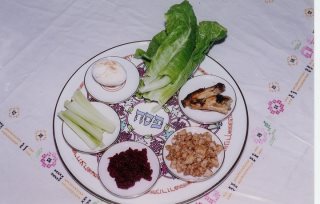
 In the center of each table, there is a Seder plate complete with several symbolic foods. We will eat from them at specific times as their meaning is explained through the Seder readings. The Passover is usually a family celebration, led by the mother and father. Sometimes groups of people will celebrate it together, led by the host, as Jesus did with the disciples. Today each table will be a family group, and we will be led from the center table by our honorary father and mother. From time to time I will narrate some explanations, and we will also hear from a New Testament Voice that will echo from our Christian tradition the ways Jesus layered meaning from the Seder throughout his life and ministry. A traditional Seder may take three to six hours to celebrate. Today we will be respectfully celebrating some of the key elements.

New Testament Voice (Luke 22: 7-8):          

 “Then came the day of Unleavened Bread, on which the Passover lamb had to be sacrificed. So Jesus sent Peter and John, saying, “Go and prepare the Passover meal for us that we may eat it.”

 Narrator:                                                                                    

There are four Seder cups per person- a cup for each of the four promises God made in Exodus 6:6-7. The first cup is called the Cup of Sanctification for the first promise in Exodus 6:6 : “Therefore say to the Israelites ‘I am the Lord and I will bring you out from under the yoke of the Egyptians.” Please pass the tray of small individual cups around your table so that each person will have their first cup ready in front of them.

 Mother lights the candle and prays:         

Blessed are you, Eternal God, King of the Universe, who has sanctified us through your commandments and instructed us to light the holiday candles.”

Father: Lifts the first cup and prays:       

In your love, O Eternal, you wanted us to know joy and have given us holidays and festivals and this day of celebration of the Feast of Unleavened Bread and of our escape from slavery in Egypt.

Father: Uncovers the matzah, lifts it for all to see, and says:                

Here before me are three pieces of matzah. It is said these represent the priests of theTemple, the Levites of theTemple, and the congregation ofIsrael.

He breaks the middle matzah in two and explains:                        

We break the second matzah and hide one part of it while the children cover their eyes. This part is called the Afikoman, which means ‘that which comes after.’ After the meal the children will look for it and the two will be back together again. This will be a sign that what is broken is not really lost. Children- cover your eyes!

Children cover their eyes while the hiding of the Afikomen is enacted  by the mother and the father at the center table. The Afikomen has already been hidden at each of the tables for the children to find later in this service.

New Testament Voice (Matthew 26:26 and Luke 23:52):                       

While they were eating, Jesus took the bread, and after blessing it he broke it, gave it to the disciples, and said, “Take, eat; this is my body.”

 [Joseph of Aramathea] went to Pilate and asked for the body of Jesus. Then he took it down, wrapped it in a linen cloth, and laid it in a rock-hewn tomb where no one had ever been laid.

Mother:                                                                                                    

Now is the time for the Haggadah, which means “telling the story.” It is the story of the Jewish people’s enslavement and the night of the Passover when God freed them. Now listen carefully while I read Exodus 12: 1-14. She reads the Scripture account.

 Father:                                                      

There are many important things for us to remember for our Passover Seder. The children must learn, too. Do the children have any questions?

 All children and youth together:

On all other nights we eat either leavened or unleavened bread, but on this night only unleavened bread. Why is this night different?

All Women together:                      

God told us to be ready to leave quickly when he freed us from the Egyptians. There was no time for the bread to be made with leaven and rise. So we eat unleavened bread to remember we were freed quickly.

 All children and youth together:

On all other nights we eat all kinds of herbs, but on this night we eat bitter herbs. Why is this night different?

 All Men together:                                    

On this night we remember the bitterness of slavery before God set us free.

 All children and youth together:

On all other nights we do not dip our vegetables, but on this night we dip them twice—in the salt water and the charoset. Why is this night different?

 All men together:                                 

On this night we dip once in salty water to remember the tears of slavery, and once in the charoset which looks like mortar for bricks, to remember the bricks we were forced to make from mud and straw.

 All children together:

On all other nights we eat either sitting or reclining, but on this night we eat reclining. Why is this night different?

 All women together:

In contrast, the Israelites ate the first Passover meal standing, ready to leave at any minute. On this night we relax and recline as free people do and no longer as slaves. We eat in comfort and peace because God has set us free.

 New Testament Voice (John 13:21-25):       

Jesus was troubled in spirit, and declared, “Very truly, I tell you, one of you will betray me.” The disciples looked at one another, uncertain of whom he was speaking. One of his disciples—the one whom Jesus loved—was reclining next to him; Simon Peter therefore motioned to him to ask Jesus of whom he was speaking.  So while reclining next to Jesus, he asked him, “Lord, who is it?”

 The service continues (it is a little longer than our regular services, but much shorter than a traditional Seder meal) and concludes with The Lord’s Supper served at the table.

This has been a super experience for me.  I am thankful for all who make this possible each year.  Tonight I am tired, for it has been much work to prepare and to finish this project.  But we do remember.  We ask questions and we are blessed!

Posted in About Tom | 8 Comments

The Waves Do Circle Me


I wrote early this morning while I was working at the Divine Intervention cold weather ministry, and after finally spending some time editing my responses to John Wesley’s questions.

The Waves Do Circle Me

I hear new waves this morning
Splashing on the shore not as warning,
But waves splashing on my soul,
Calming me, lifting my spirit full.
Jesus loved to be at his lake,
And at my Lake Michigan I am fully awake.
Crowds passing me, and the water breaking at the pier,
I have left dull sadness behind, sunny waves flushing my fear.

In this community of Christ’s disciples, support circles me in waves.
I am uplifted by folks who have been with me for days and days.
Support comes in waves.
Spirit holds me; He saves.
Shepherded by disciples who hold me,
And let me look through many eyes to see,
My spirit leaps, and I am lifted high,
Joy fills my dull senses, and I reach to the sky.

I am blessed by new waves.

© Tom Bolton, March 24, 2012

Posted in Poetry, Reflecting on Scripture | Tagged , , , , , | 1 Comment

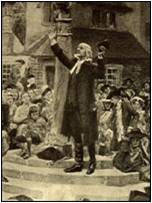
John Wesley on Prayer


I’ve been reading from a little book I found on eBay a few weeks ago:  How to Pray:  The Best of John Wesley on Prayer (Uhrichville, OH:  Barbour Publishing, 2007), and it has some wonderful excerpts from Wesley’s sermons on prayer.  I just wish it was cited more fully.

About every 5 pages, the book presents a short quote in a larger font–some of the more famous quotes.  (I wish the editors were identified by name, so that I might cite them here.)  On page 47, for instance, this gem is reprinted:

“Give me one hundred preachers who fear nothing but sin and desire nothing but God, and I care not a straw whether they be clergyman or laymen; such alone will shake the gates of Hell and set up the kingdom of Heaven upon the earth.”

Actually, I most often see a slightly different version of that quote, but this one is fine, and it does inspire me.  The book draws from Wesley’s sermons, pamphlets and books. It is very much focused on John Wesley’s beliefs and teachings of the “heart of prayer.” This anthology is more inspirational than practical.

Many of the excerpts seem like paraphrases of longer collections which I have read in older editions of Wesley’s sermons, but, nevertheless, these are well-organized and helpful.  For instance on page 23 of this new pocket edition, there is a one-page compilation of a sermon on I Thessalonians 5:16-18 ( Rejoice always; pray without ceasing… give thanks (NASB)):

“Rejoice always” in uninterrupted happiness in God. “Pray without ceasing,” which is the fruit of “always rejoicing” in the Lord. “In everything give thanks,” which is the fruit of both the former. This is Christian perfection. Further than this we cannot go, and we need not stop short of it.

Our Lord has purchased joy, as well as righteousness, for us. It is the very design of the gospel that, being saved from guilt, we should be happy in the love of Christ.

Prayer may be said to be the breath of our spiritual life. One who lives cannot possibly cease breathing. So much as we really enjoy of God’s presence, so much prayer and praise do we offer up “without ceasing”; else our rejoicing is but delusion.

Thanksgiving is inseparable from true prayer; it is almost essentially connected with it. One who always prays is ever giving praise, whether in ease or pain, both for prosperity and for the greatest adversity. He blesses God for all things, looks on them as coming from Him, and receives them only for His sake–not choosing nor refusing, liking nor disliking, anything, but only as it is agreeable or disagreeable to His perfect will.

“For this,” that you should thus rejoice, pray, give thanks, “is the will of God,” always good, always pointing at our salvation!

Amen! I enjoyed reading that short excerpt early one morning.

Another day recently, I found myself pondering an excerpt about praying through temptation. On page 34, we find this preaching on the text 2 Peter 2:19 (“The Lord knows how to rescue the godly from temptation.” NASB) This almost seemed like a practical guide to me:

If darkness is occasioned by manifold, heavy, and enexpected temptations, the best way of removing and preventing this is to teach believers always to expect temptation. They dwell in an evil world, among wicked, subtle, malicious spirits, and have a heart capable of evil. They must be convinced that the whole work of sanctification is not, as they may have imagined, wrought at once. When they first believe, they are as newborn babes who are to gradually grow up. They may expect many storms before they come to the full stature of Christ.

Above all, let them be instructed, when the storm is upon them, not to reason with the devil but to pray.  Let them pour out their souls before God and show him of their trouble.  ….

To the tempted we may may declare the loving-kindness of God.  Dwell upon His faithfulness and the virtue of that blood shed for us to cleanse us from all sin.  God will bear witness to His Word and bring them out of trouble.  He will say, “Arise; shine; for your light has come!  And the glory of the Lord is risen upon you.”

 I will close, now, with a favorite quote by Wesley on prayer:

God’s command to “pray without ceasing” is founded on the necessity we have of his grace to preserve the life of God in the soul, which can no more subsist one moment without it, than the body can without air.

Whether we think of; or speak to, God, whether we act or suffer for him, all is prayer, when we have no other object than his love, and the desire of pleasing him.

All that a Christian does, even in eating and sleeping, is prayer, when it is done in simplicity, according to the order of God, without either adding to or diminishing from it by his own choice.

Prayer continues in the desire of the heart, though the understanding be employed on outward things.

In souls filled with love, the desire to please God is a continual prayer.

As the furious hate which the devil bears us is termed the roaring of a lion, so our vehement love may be termed crying after God.

God only requires of his adult children, that their hearts be truly purified, and that they offer him continually the wishes and vows that naturally spring from perfect love. For these desires, being the genuine fruits of love, are the most perfect prayers that can spring from it.

From A Plain Account of Christian Perfection, as believed and taught by the Reverend Mr. John Wesley, from the year 1725, to the year 1777.

Posted in About Tom, Recommendations | Tagged , , , | 3 Comments